Industry · Electricity Distribution
From faults to maintenance, meters to network assets: all the field work of distribution
A workspace for each unit, focused on its own work; all share the same data model, sign-in and SAP integration layer.
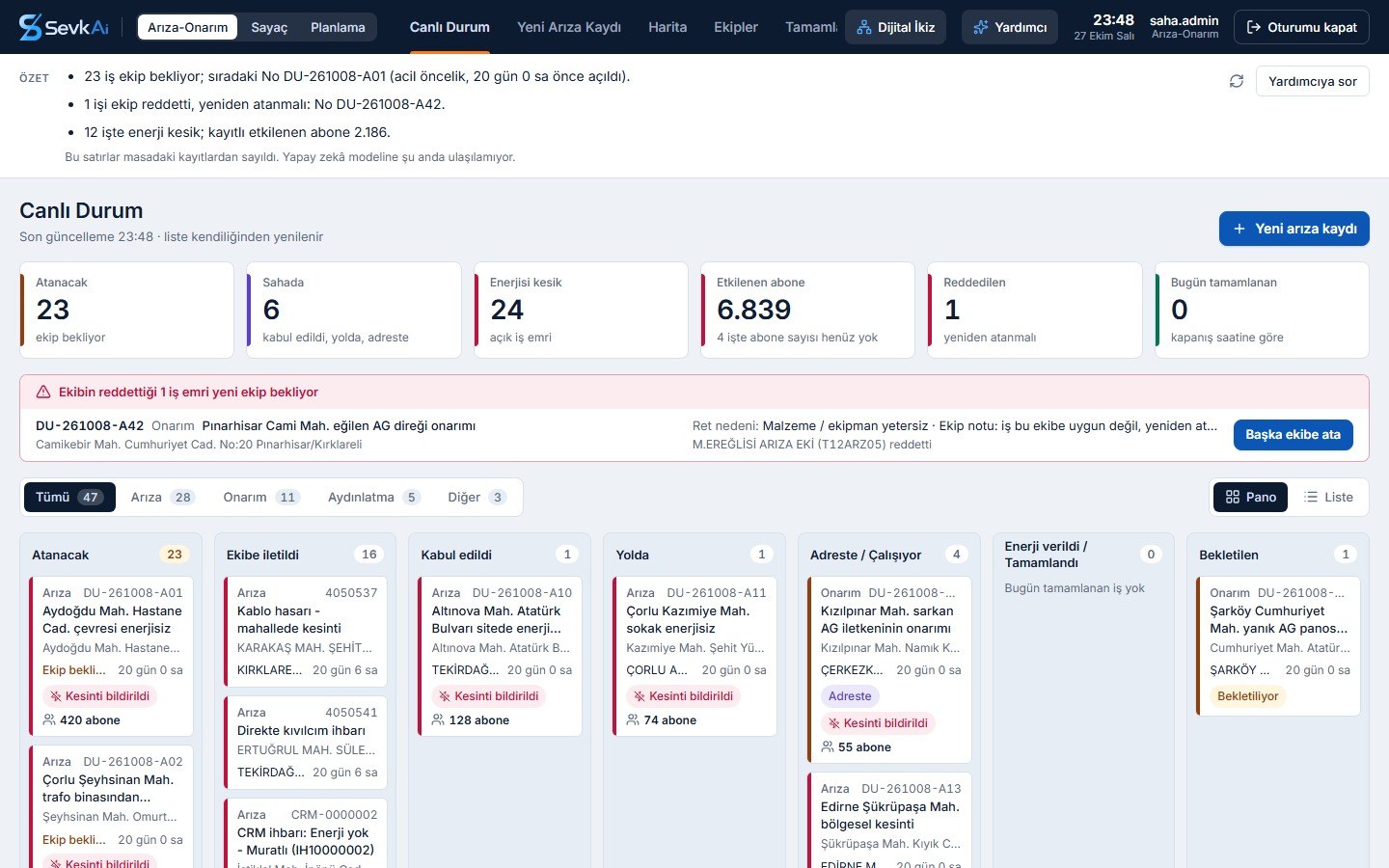
Fault and Repair
Manage faults from first call to re-energisation
- Call clustering: last-gasp signals and 186 calls cluster on the map
- FLISR suggestions: isolate the faulty section, restore healthy branches
- Smart auto-assignment: proximity, MV/LV competence, workload
- Life-support customers first; EPDK outage records and compensation
- 4-stage board: to assign, en route, on site, done
Operations
Outage, storm and emergency management
Outage command room
Customers affected and restored, restoration estimate, calls, switching.
Planned outage notice
48-hour advance notice rule and EPDK notification report.
Storm mode
Forecast, active, recovery, closure; critical customers first.
Demand response
Peak detection from feeder telemetry; execution with operator approval.
Predictive alerts
DGA diagnosis with the Duval triangle (IEC 60599); alerts become work order suggestions.
AMI and telemetry
DLMS/COSEM remote connect/disconnect, ISA-95 UNS streams, crew chat.
Scenario lab: test the pilot without touching live systems
Run scenarios from the outage console; crews and operators rehearse what they would do in a real event. On the switching strip, control is blocked at any point with a LOTO lock; SAP PM, GIS and CRM simulators with fault injection allow end-to-end trials.
- Feeder breaker trip
- Automatic FLISR
- AMR last-gasp wave
- Buchholz / DGA alarm
- 186 call storm
- Full storm drill
Metering and AMI
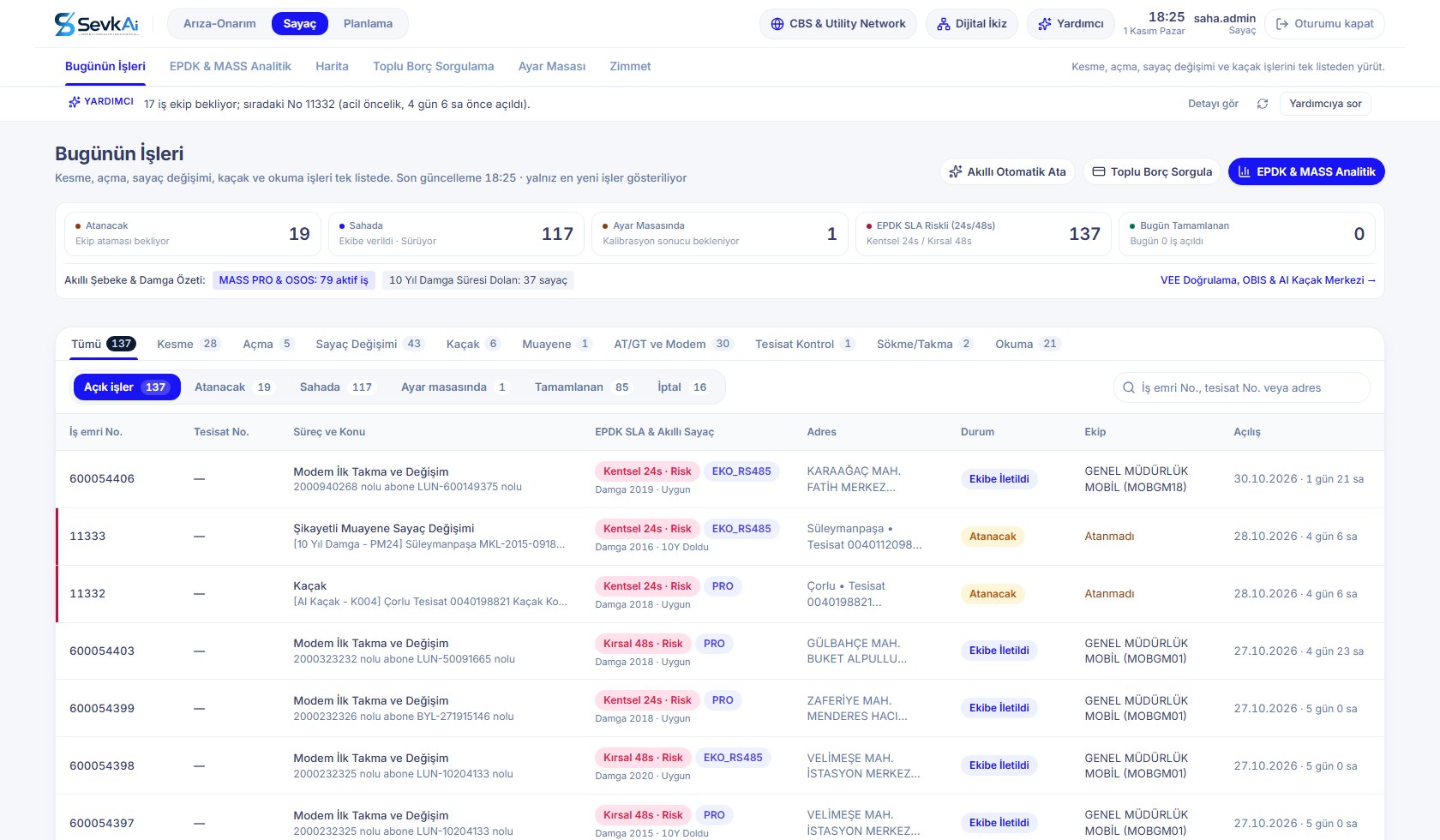
From disconnection to calibration, within legal deadlines
- EPDK deadlines: 24 hours urban, 48 hours rural
- Bulk debt check: a paid customer’s order closes before the crew leaves
- Calibration desk: error percentage and automatic certificates
- Meter and seal custody; Bluetooth optical probe (IEC 62056-21)
- Reading quality: VEE engine, OCR, suspicious consumption flags
Planned maintenance
Maintenance and investment on a compliant calendar
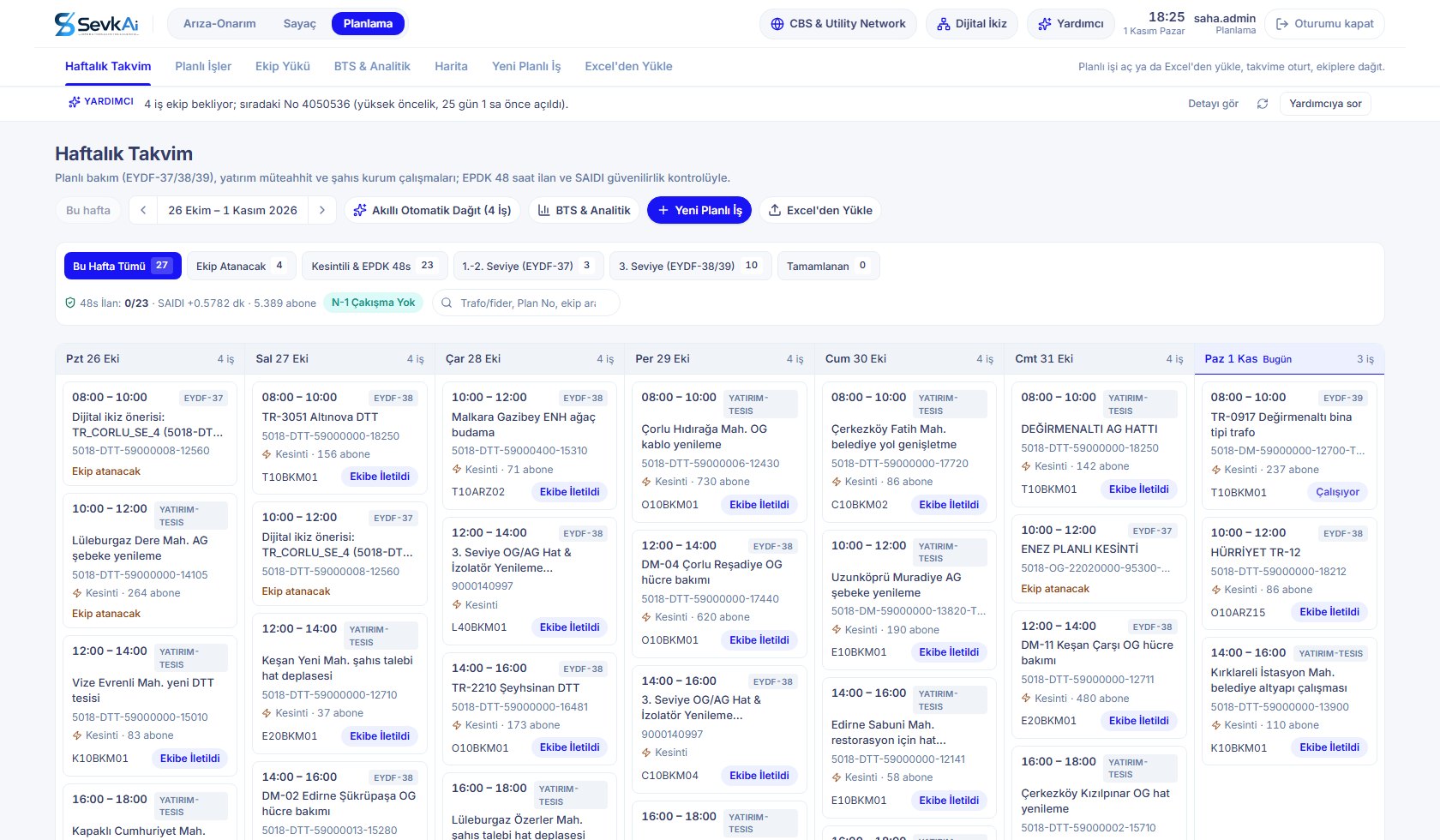
Planned jobs go onto a weekly calendar; outage notices, network conflicts and reliability impact are checked as you plan.
- EYDF levels: level 1, 2 and 3 maintenance forms
- 48-hour notice rule validated automatically for planned outages
- N-1 conflict checks and the SAIDI impact of every plan
- Bulk upload from Excel and SAP maintenance plans
Network GIS and digital twin
See the electrical topology, simulate the network
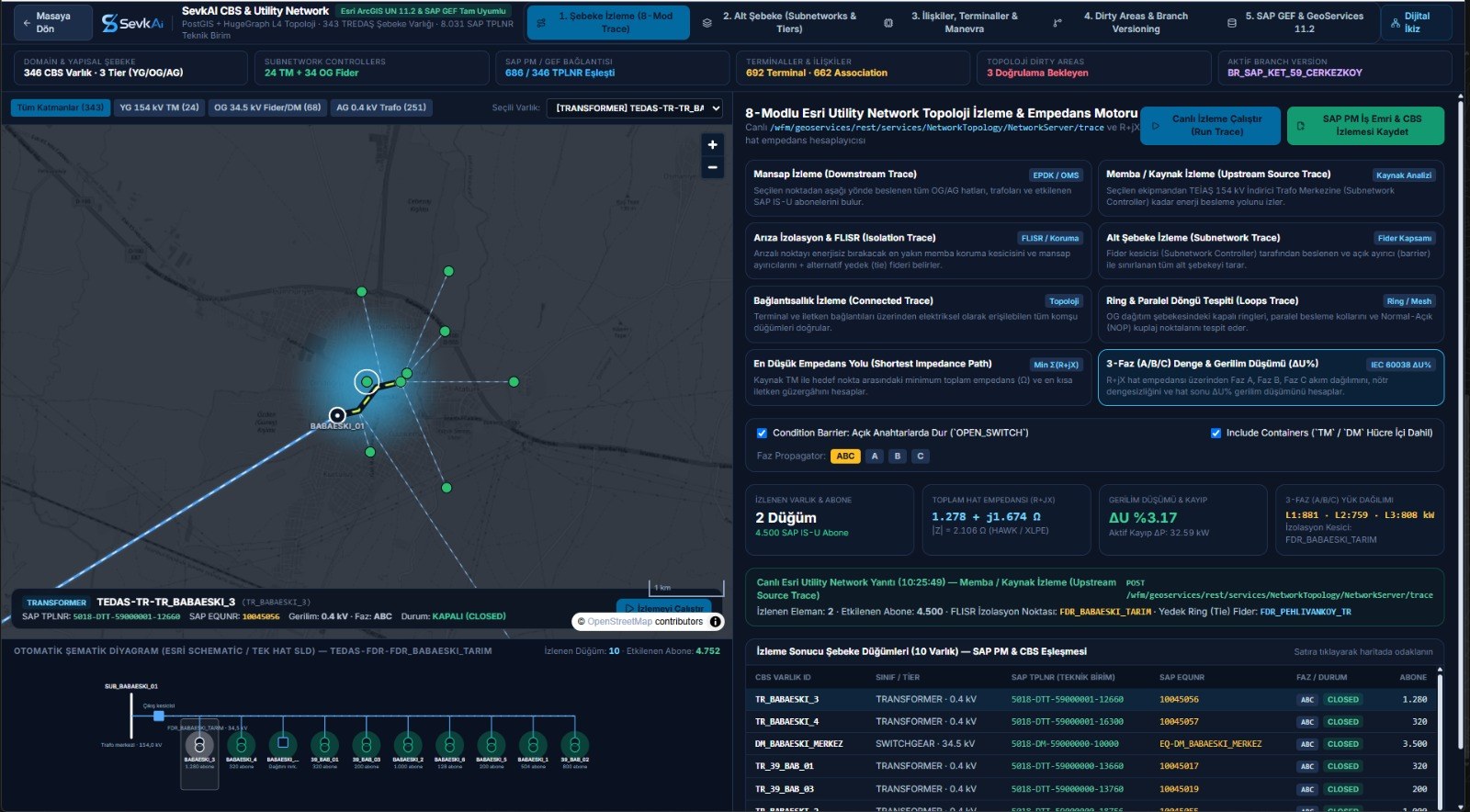
Electrical topology on one screen
8-mode topology tracing: downstream and upstream, fault isolation, subnetwork, connectivity, ring analysis, impedance path, phase balance and voltage drop.
- Design branches: design without touching the live network, reconcile, publish
- Single-line diagram with each node’s SAP functional location
- From trace to work order: a work order straight from the result
- Switching safety: IEC 62271 interlock under load
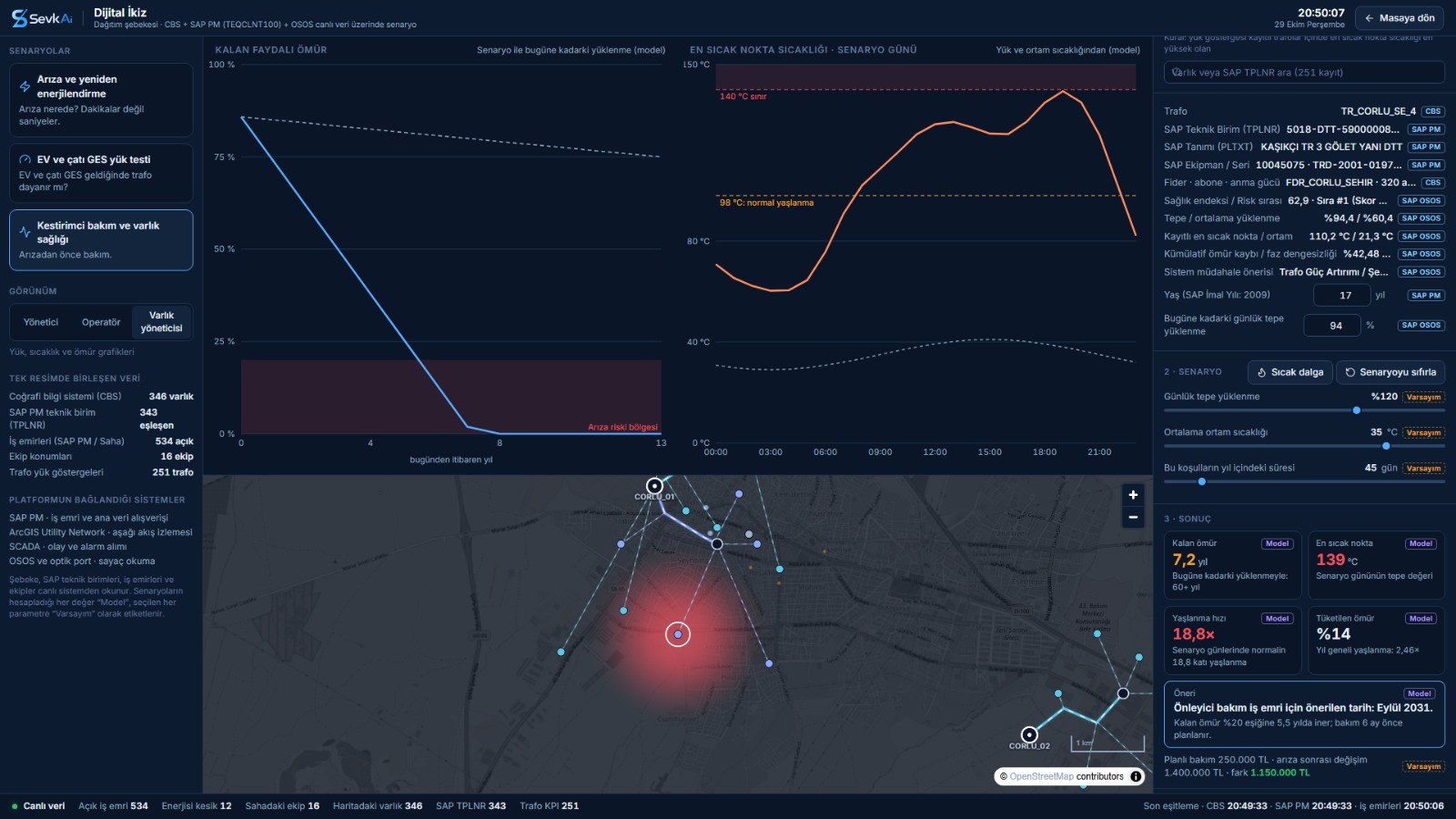
Simulate the network, then decide
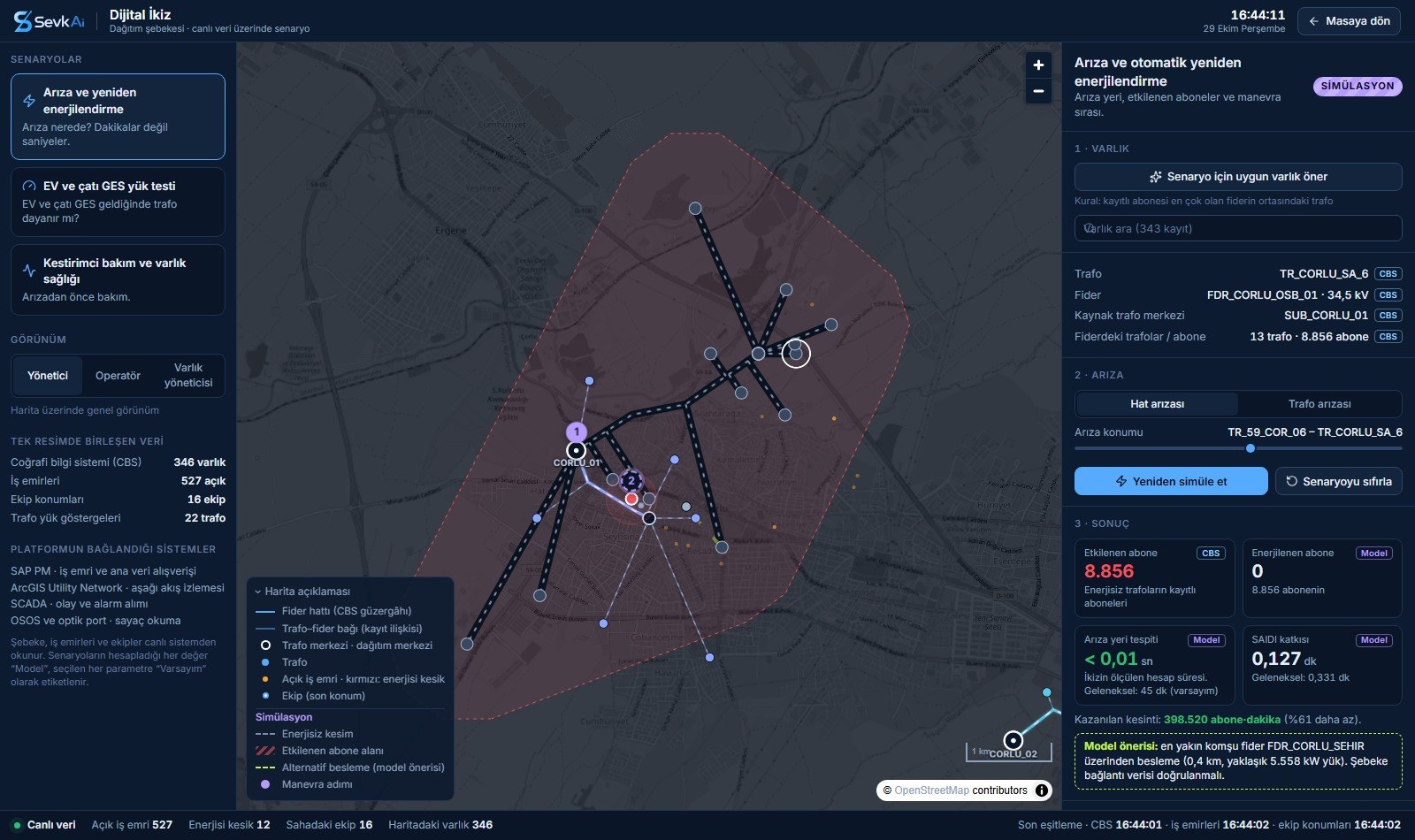
GIS topology, SAP functional locations, SCADA alarms, smart meter load profiles, open work orders and crew locations come together in one model.
- Fault and restoration: alternative supply switching, customers restored
- EV and rooftop solar load test: transformer overload, voltage rise
- Predictive maintenance: age, oil temperature, loading, fault history
- Live data and model assumptions are labelled separately
Network asset management (EAM)
Every transformer, breaker and pole has one identity
The network assets that work orders attach to are managed inside SevkAI. Each asset is matched to its SAP functional location, GIS feature and SCADA tag.
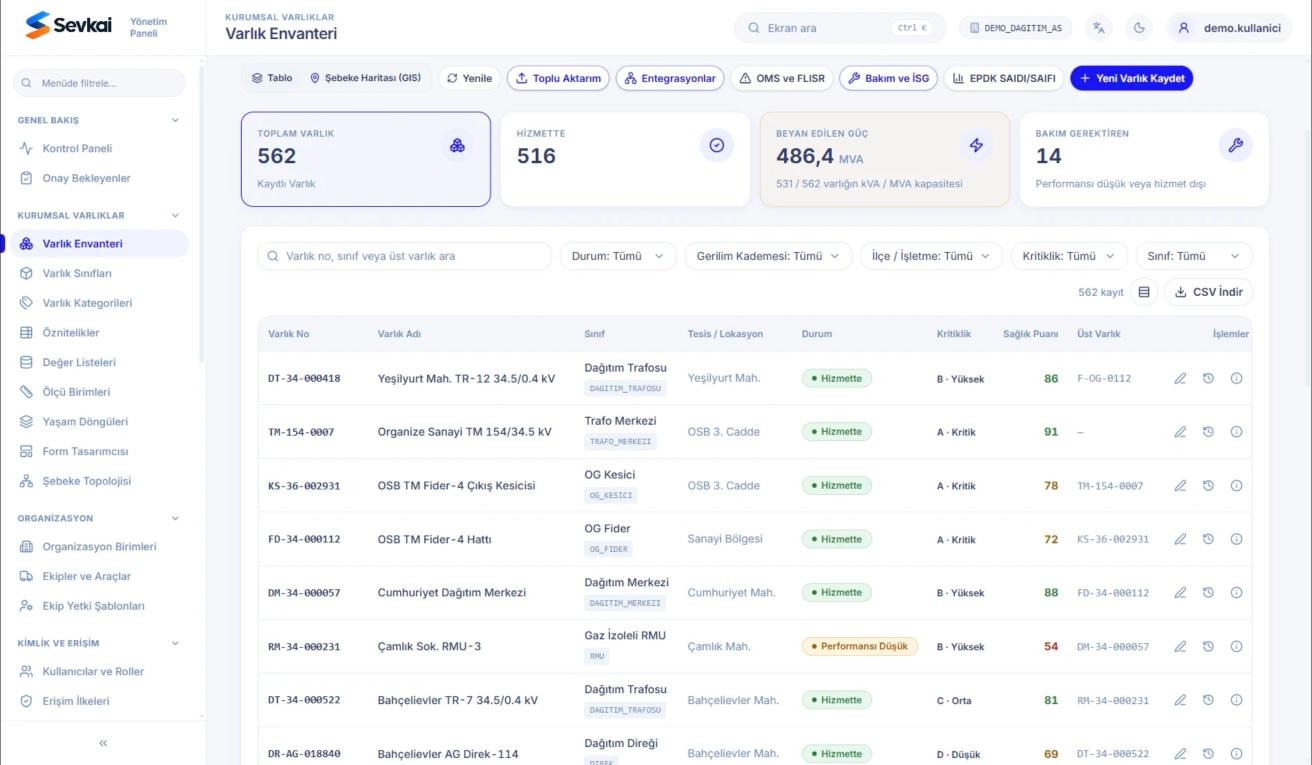
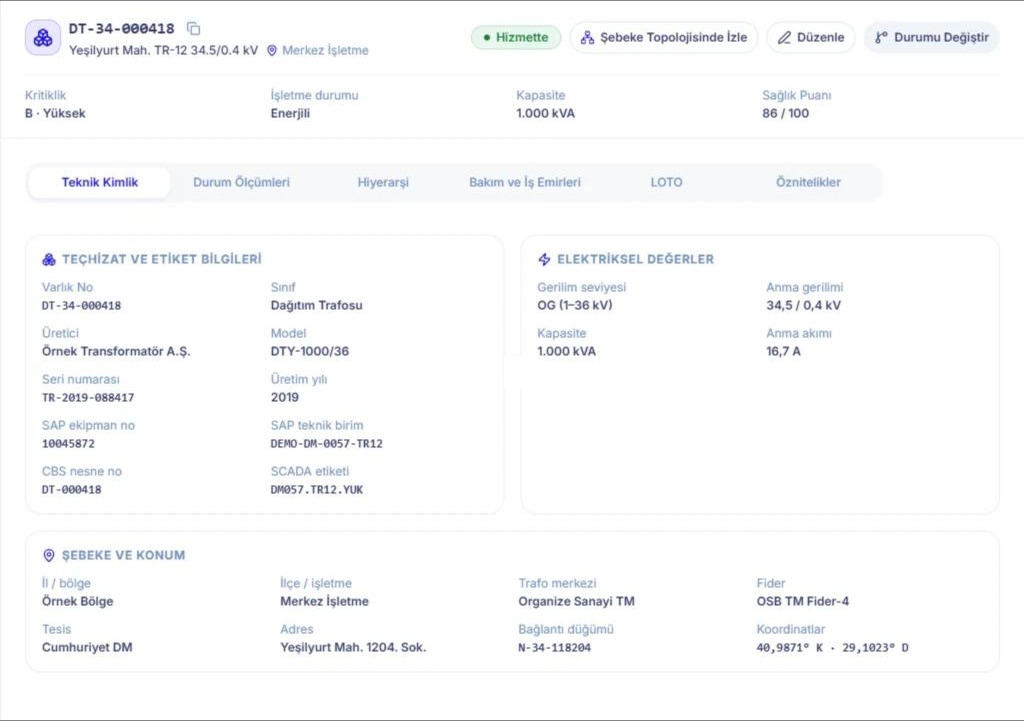
Asset inventory
Operating status, A–D criticality, health score and parent asset; filter by voltage level, district and class; table, map and CSV.
Lifecycle
14 stages from planning to disposal; each change logged with its reason and user. ISO 55001 and IEC 61968 (CIM) approach.
Configurable catalogue
Categories, classes and attributes; point, line and area geometry; organisation-specific classes and nameplate fields.
Engineering vocabulary
Coded value lists: cooling type, insulation medium, conductor type; kV, MVA, kVAr, ppm, μΩ units.
Network topology
Downstream and upstream connectivity and isolation traces; planning changes in a separate branch version.
SAP and GIS matching
Pull from SAP or bulk CSV/JSON import; two-way GIS sync; missing-data report.
See the risk, prioritise investment
Health, risk and failure data turn into maintenance and investment decisions.
- Risk matrix (APM): 5×5 heat map (ISO 55000), CIGRE health index, remaining life
- Predictive alerts: SF6 pressure loss, overheating, rising DGA hydrogen
- FMEA: ISO 14224 taxonomy, root cause Pareto, MTBF and MTTR
- Device lab: EN 50470, IEC 61869 calibration, AQL acceptance
- Investment planning: 1–5 year budget; candidates ranked by risk cost
Data in the screenshots is representative.
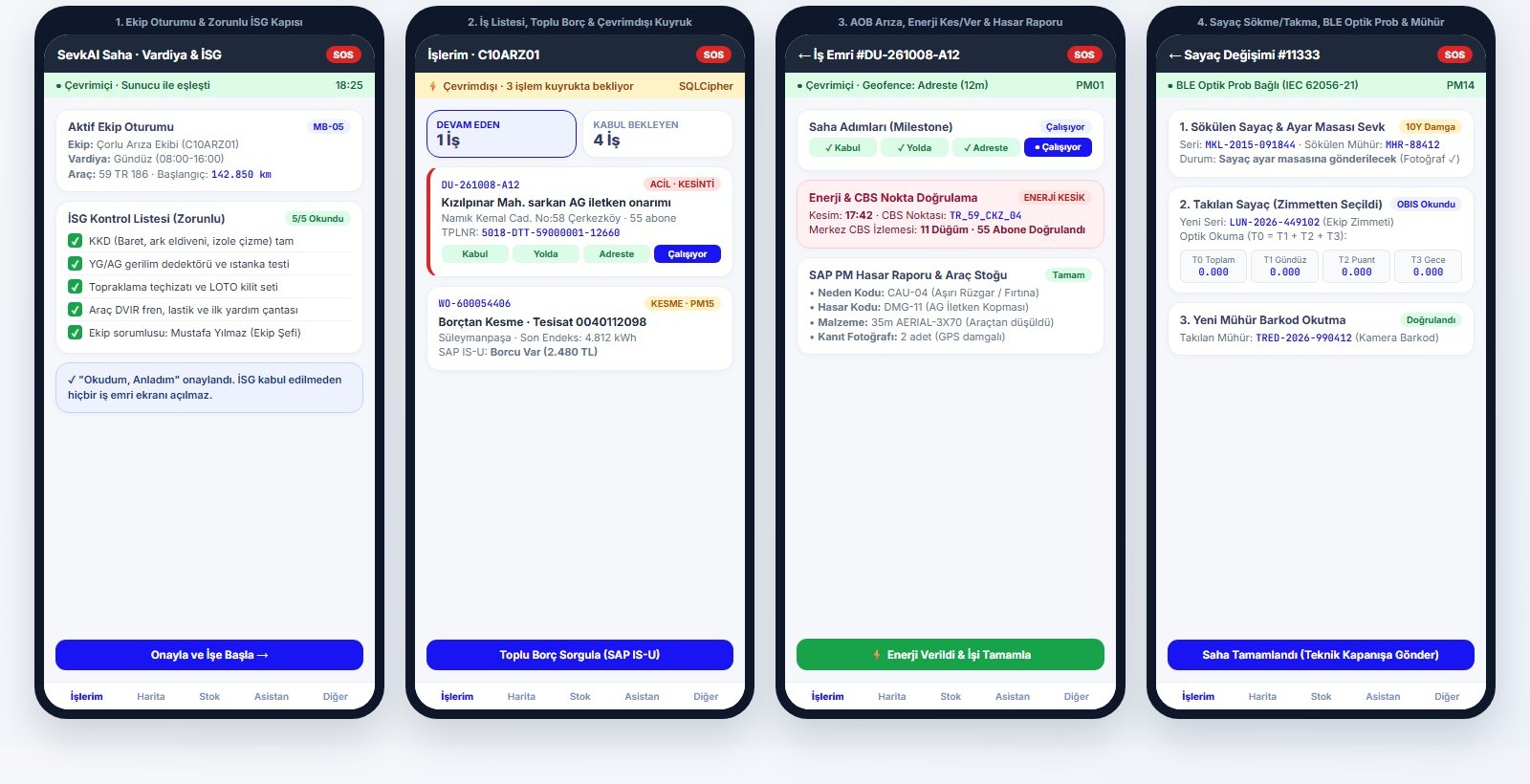
SevkAI Field
Work goes on in the field even when the connection drops
The Android and iOS field app runs fault, maintenance and metering work orders.
- Mandatory safety gate: no work screen opens until the crew session and safety checklist are confirmed
- Energy lock: “Energised” stays locked without an isolation record; one active job, holds and handovers with reasons
- Offline queue: every step is stored in a 256-bit encrypted database and sent in order later, with no duplicates
- Evidenced steps: accepted, en route, on site (GPS geofence), de-energised/energised; camera-only, location-stamped photos
- Meters and seals: index by IEC 62056-21 optical probe; seals and materials by barcode; only seals issued to the crew
- Field support: SAP damage codes, SOS, sunlight mode and an AI assistant for technicians
Permits and LOTO: safety is part of the process
- 1Request
- 2Risk
- 3Isolation
- 4Authorisation
- 5Issue
- 6Work
- 7Closure
Isolation record
LOTO points, lock serials and tags; zero-voltage verification.
Four-eyes rule
Requester and approver cannot be the same person; role-based approval and delegation.
Permit types and PPE
LOTO, hot work, confined space, work at height; PPE by job type, hazard zones on the map.
Support processes
From requests to materials, every record tied to a work order
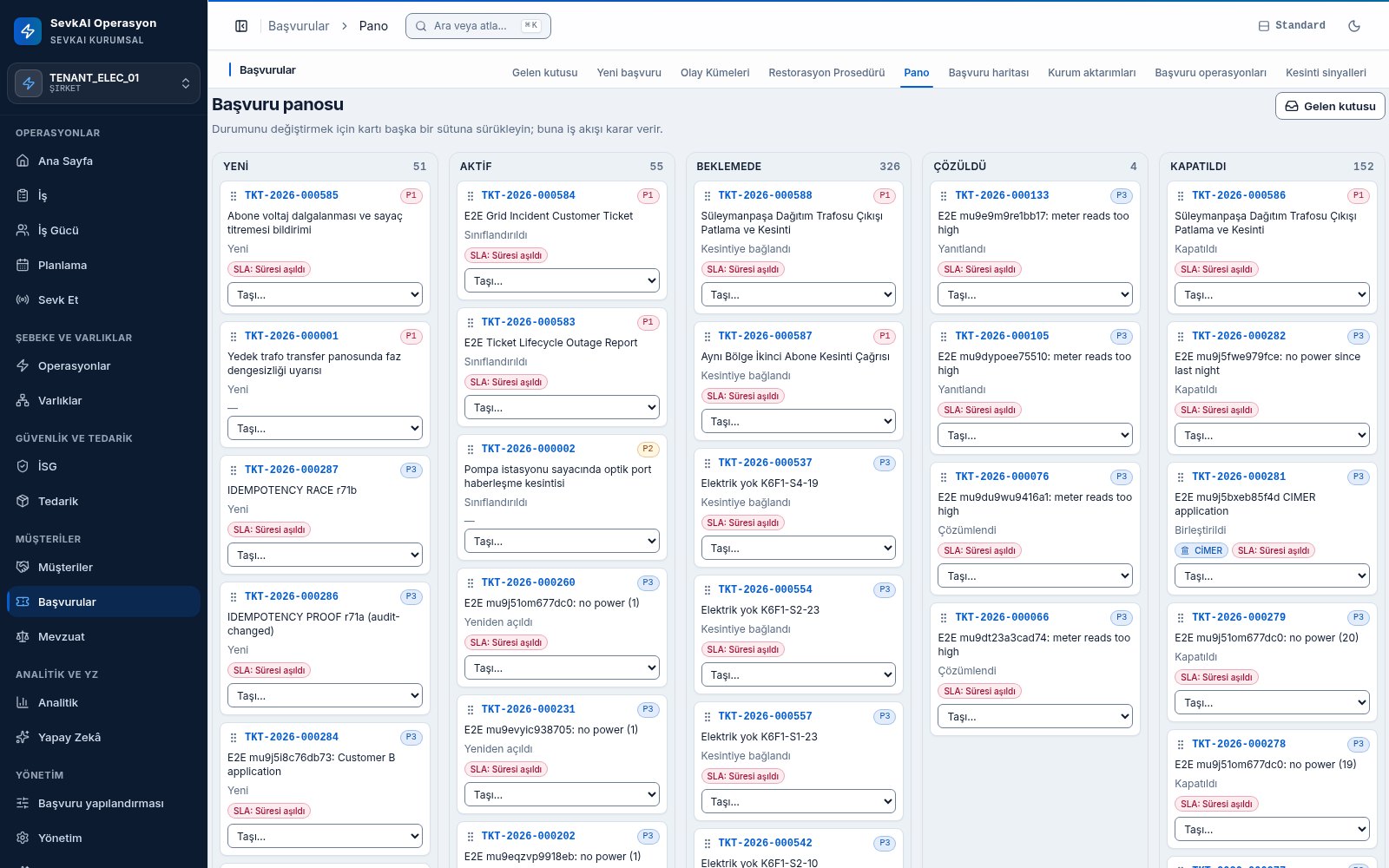
Customers and requests: one record from call to resolution
- Types: fault, complaint, request, information, objection, theft, damage, KVKK
- Board and map: drag and drop, SLA status, hazard flag
- Customer 360: service points, contact preferences, satisfaction
- CİMER, EPDK, e-Government request import
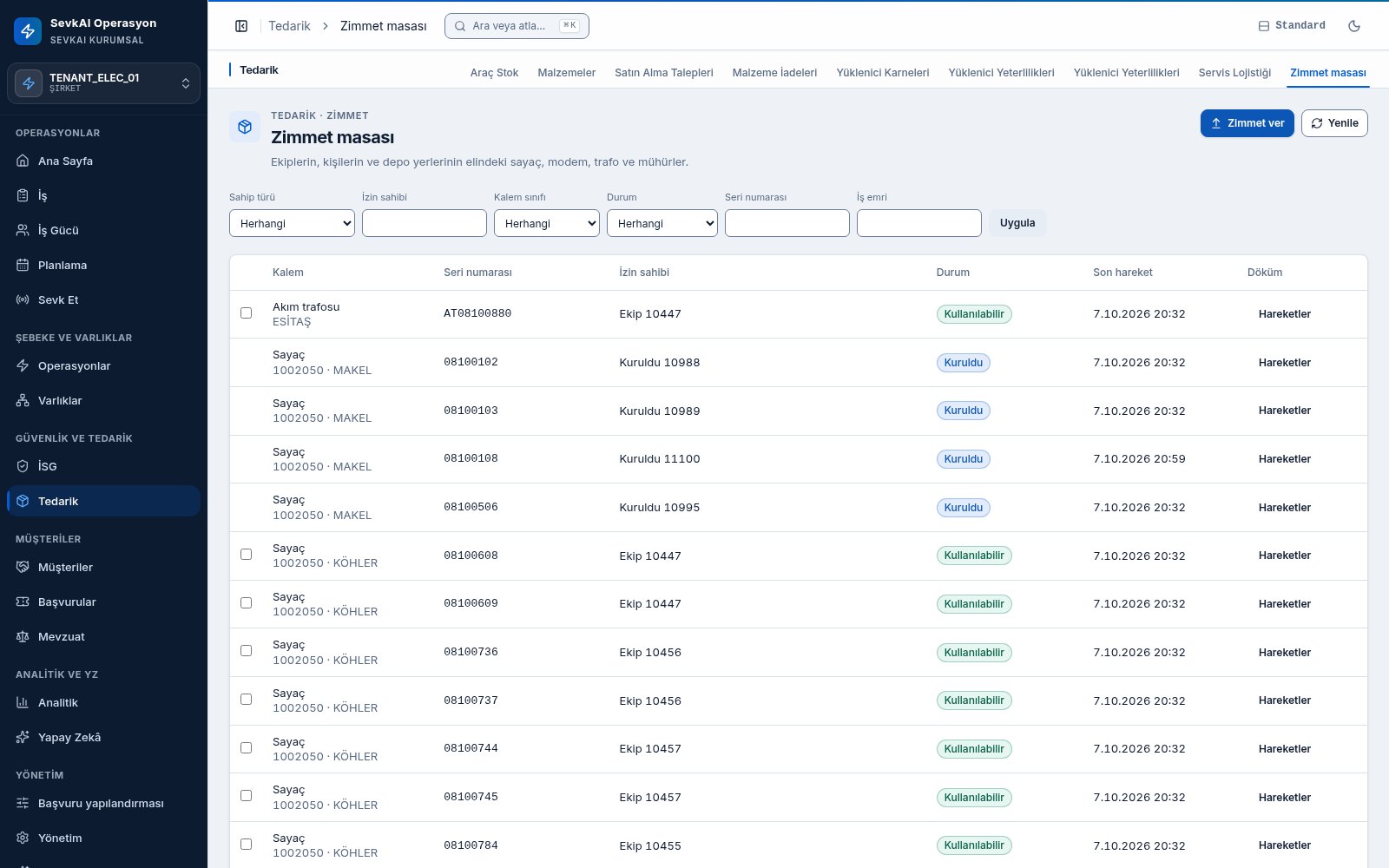
Supply: traceable materials, warehouses and custody
- Van stock and reorder thresholds; purchasing and returns
- Custody desk: meters, modems, CTs/VTs and seals by serial number
- Service logistics: parts requests, costs, workshop repairs
- Contractor scorecards and qualifications
Regulation and analytics
Regulation built into the software
EPDK and KVKK obligations run as versioned rules; compliance happens at the moment of work, not at reporting time.
Rule pack
Versioned EPDK/KVKK rules, diff testing, date-based effectivity.
Compensation
Automatic suggestion, four-eyes approval, transfer to CIS.
EPDK reports
Table 7-A / 7-B records, complaints report, annual audit pack.
KVKK
Data subject requests, contact consents, masked personal data.
Reliability and performance, measurable
IEEE 1366 indices; major event days are separated with the 2.5 beta method and the calculation basis is shown on screen.
- Field KPIs: first-time fix, SLA compliance, mean time to repair
- SLA ledger: SHA-256 hash-chained records; EPDK reporting studio
- Thematic dashboards: energy losses, revenue protection, transformer health, meter comms
- CSV export: personal data masked, every download audited
See SevkAI on your own network
Contact us for a live demo, an integration assessment and an on-premises pilot.